
Make It Possible
The Tub that Never Made it
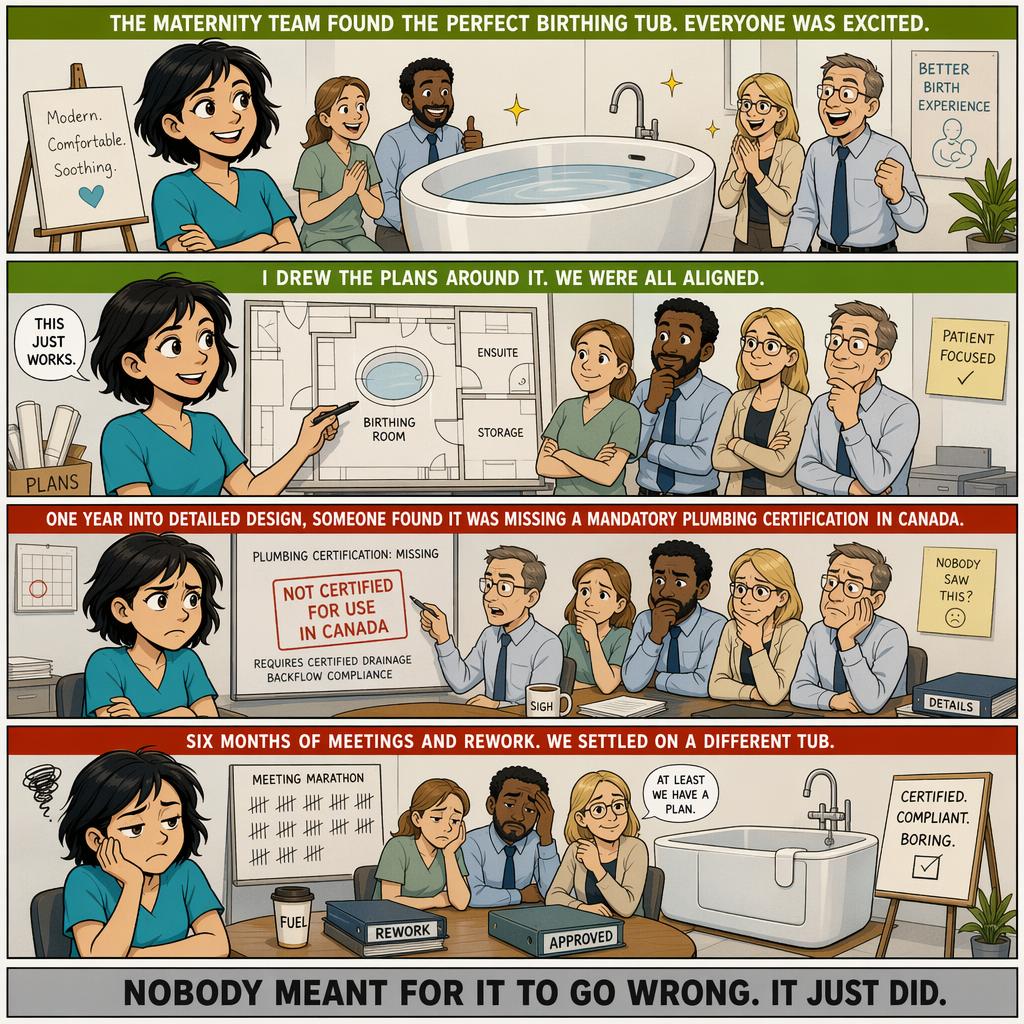
That was unfortunate. Those were some of my most memorable moments since everyone went from hyped to fight mode to speechless.
The plan had been so good, we had the budget and the space to fit a tub in each room.
The AI that Avoided Getting Yelled at
AI promised efficiency. What I got was more work at first.
I said I would share AI limitations and use in my adaptation to hospital and equipment planning. This one is about accuracy. Or the lack of it.
I was experimenting with how AI could help with medical device sourcing. One of the first things I tried was having a large language model (LLM, the chatbot behind ChatGPT and Gemini, and what most of us mean when we say AI) generate a comparison table of ultrasound machines with specs.
I got wild answers. Some incomplete. Some with no reference. So I asked it to give me the sources where it extracted the information from.
The sources existed. But many were old pages that throw 404 error. The data was obsolete.
Most brand names were correct. But some devices were only available in Europe because a European hospital had a post about them and it ranked high enough in the LLM search.
I had to verify each one myself. Most took longer than just googling directly.
I was frustrated and realised this is not the efficiency promised by all AI companies.
When I told the LLM to stop making things up, it put N/A for 80% of the columns to avoid getting yelled at again.
I was tired of yelling anyway. It wasn’t helping. It was just protecting itself.
What is most visible online is obviously the wrong compass to find a device that saves lives.
I eventually built a more systematic approach by feeding it with carefully selected context and accurate data into my cutsheet generation tool.
Before that, you may try this yourself. Give the LLM a webpage with the specific context you need before asking the question. This is the simplest way to avoid wild answers and obsolete sources.
Someone you know has been through this? Forward it to them.